SIGNAL/NOISE: In search of the spark

Tom Knapman on inspiration in life science marketing.

12/08/26

A few months ago I sat down with The Drum for a podcast. Not their typical guest. I’m neither a CMO nor a creative director. Yet it’s more than ten years since I last donned lab specs and a white coat. The episode ended up titled “What does a chief science officer do at a creative agency?” I guess we are going to find out.

I’m a PhD biochemist. My job title is Chief Science Officer. My office is a creative agency in London. I’ve stopped trying to sort these facts into a linear career story because the linear career story doesn’t quite work. What I’ve settled on is that the scientist and the creative are the same person doing the same job in different ways, and this blog is the place I’m going to think out loud about what that means for the work.

Which brings me to my first entry. The spark.

If you’ve spent any real time in life science marketing you’ll have been to a conference like ASMS. Thousands of scientists together in the same city for a week, a packed agenda of talks and posters and exhibitions. Something happens across an event like this I always thought was a powerful conduit for progress in the field. I could call it the inductive effect. You spend the week rubbing shoulders with the giants of the field. People whose work you’ve dissected, whose experiments you’ve tried to copy, whose names you’ve spoken time and time again. Their work, their presence, even their academic arguments lift your own whether you meant it to be lifted or not. You go home with a slightly different sense of what’s possible, and you can’t wait to get back in the lab.


This is the argument I keep making for creative agencies working in life science marketing. If you want to do something genuinely fresh in a category as regulated, technical and cautious as this one, you almost certainly have to look outside the category for the fuel. That’s not a plug for what we do at Boulder (it is ;-)), it’s the reason a good creative agency exists in the first place. We spend most of our time absorbing thought from industries such as entertainment, gaming, fashion, even food and drink, that life science marketing doesn’t naturally sit next to. What we get paid for is the connections between all of that, channelled with insight back into a category that would otherwise keep producing another webinar.

Which is how we ended up making a film about ice cores, vanilla plantations and a motorcycle race across a city, for a mass spec company.

The interesting thing about that lift is how personal it is. Two scientists sit through the same session; one finds the idea fragment that salvages an entire line of research. The back-of-programme sketch ends up framed on their wall. The other takes nothing from the session at all but later spots a poster in the corridor that has nailed the experiment they’ve spent the last six months trying to do. Inspiration is a currency, but it’s not fungible. It shows up in different guises for different people, and often in places they weren’t looking for it.
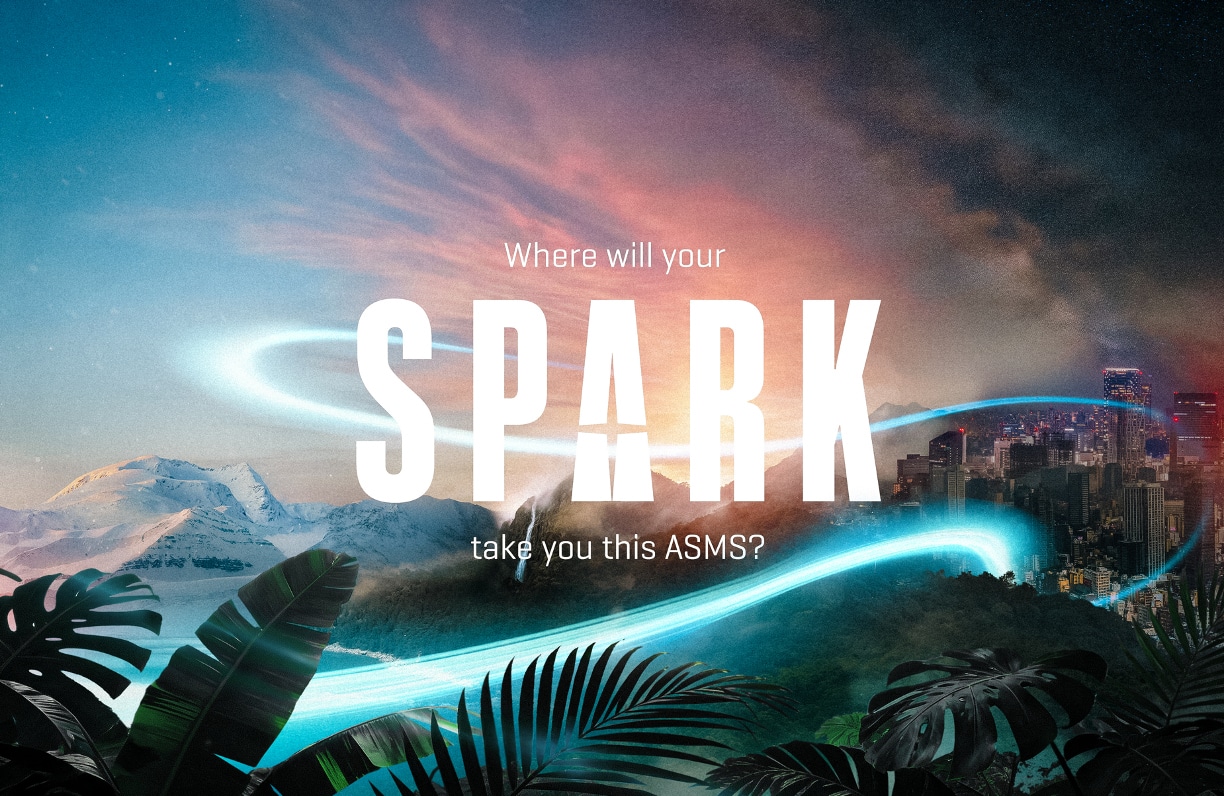
 

What is the role of inspiration in science (and in life science marketing)? In search of the Spark was an immersive film exploring inspiration.

The Campaign

It’s the evenings that make ASMS unusual. Giant hospitality suites open up, spanning vast hotel ballrooms. Furnished by SCIEX alongside every other major brand in the field. Science, entertainment, booze… It’s closer in atmosphere to a Formula 1 race weekend than to a normal scientific conference. Which makes the marketing challenge tricky: entertain thousands, land a serious point about your brand, and stay memorable in front of the same people your direct competitors are entertaining fifty yards down the hall.

The brief for the suite was thought leadership. To hero the work of SCIEX customers- real scientists doing real work in the field. That’s the shape a normal thought-leadership execution would have taken. Show the customer. Explain their science. Move on.

Fresh from watching Project Hail Mary; scoffing at the credibility of Ryan Gosling as a science teacher and fuming at his inability to balance a centrifuge, we hit on the idea of Hollywood-ising the scientists’ research into an all-action film.

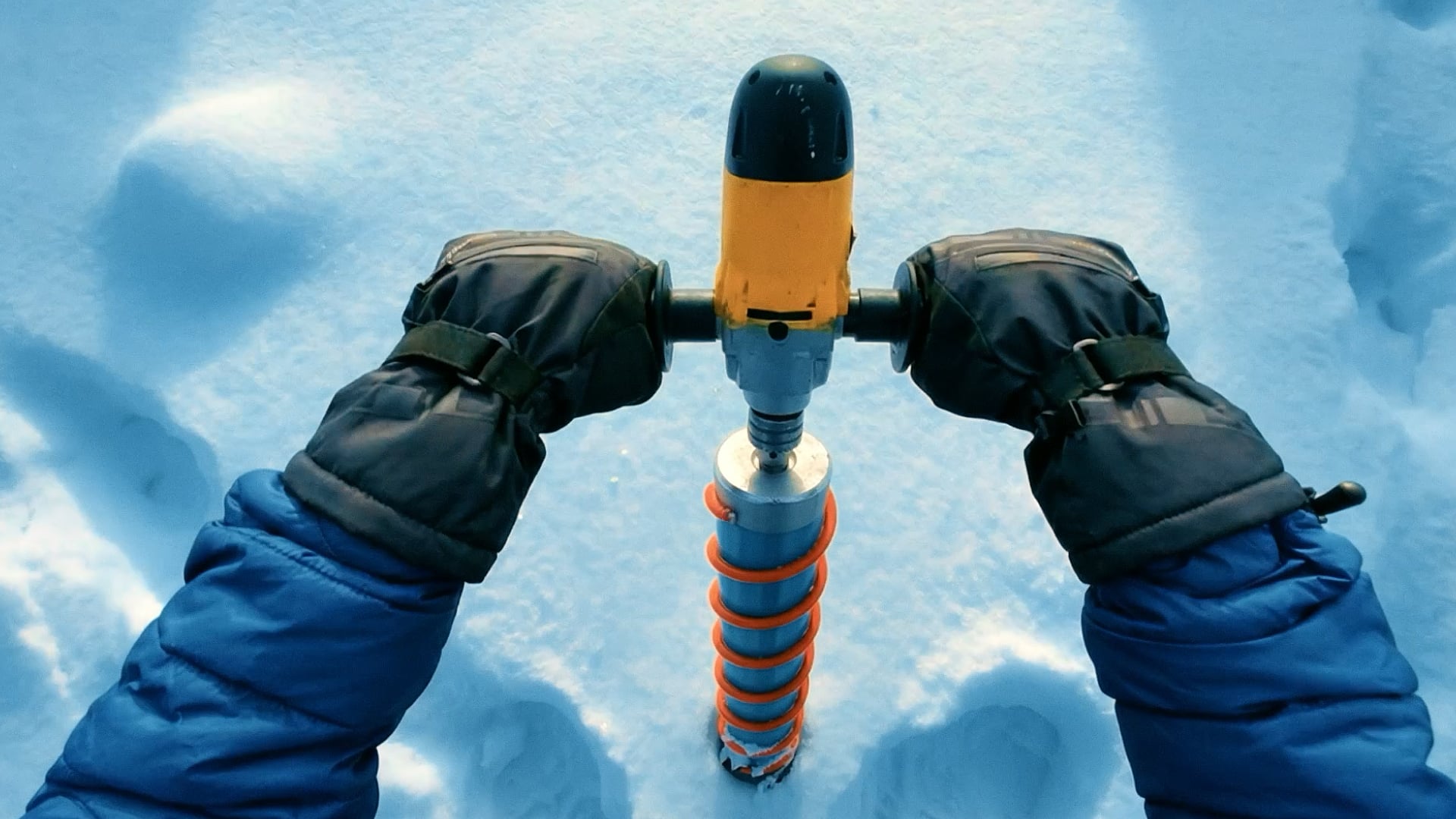
The surprising turn came when we talked to the scientists themselves. Far from Gosling’s cardigan-sporting protagonist, these folks were genuine action heroes. Cora Young drilling ice cores in the Arctic to detect PFAS. Antoine Daguin at GIRPA hunting vanilla contamination through Madagascan rainforests. Lindsay Pino at Talus Bio developing drugs for previously “undruggable” cancer targets. There was no need to Hollywood-ise anything. We just needed a vehicle to tell the stories.

Instead of viewing the customer’s story from the outside, we chose to view it from the eyes of the person walking into our hospitality suite. What if the scientist at ASMS wasn’t just the audience for the story, but the protagonist inside it?

The experience was a short first-person film. After a quick face capture on an iPad you entered the cinema and were a scientist in your own lab. Then a fragment of one of the others’ work pulled you in. Cora’s paper, and you were out on the ice. Antoine’s article, and you were in the vanilla plantation. Lindsay’s interview, and you were in a night-time hospital drawing blood, then on a motorcycle across town racing a cancer treatment against the clock. Back in your own lab, a peak appeared on your sample run. The start of your own adventure, perhaps.

Every story starts with a spark. And behind every spark, a scientist.

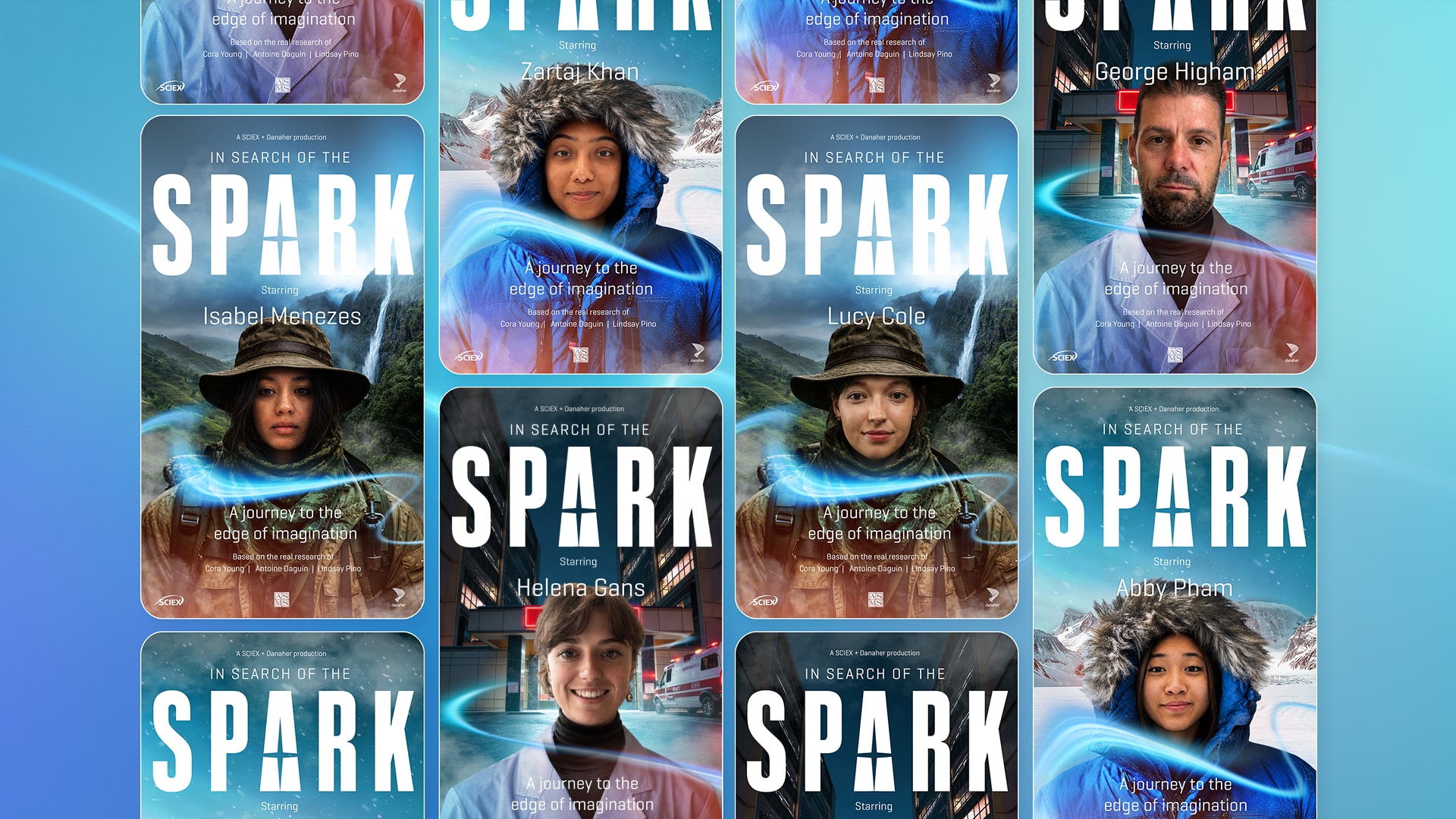
On the way out, you got an email with a trailer for the same film- but this time the camera pulled back out of first person and revealed the scientist you’d been the whole time. Using the face capture, we’d put your face into the film. You also got a personalised movie poster, with you as the protagonist of your own story.

AI production enables life science marketing to go anywhere! Here we are drilling for ice cores in the arctic
Personalised movie posters generated for each participant

The making of a blockbuster

This was one of the first campaigns we’d produced end-to-end using an AI-first production process. We shot in ordinary settings: a normal room, ordinary props, then used AI to apply the environments. Arctic tundra, Madagascan jungle, city skyline at night, all photoreal. We couldn’t have got anywhere near this level of ambition shooting on location or in a studio within the budget.

The AI conversation in marketing tends to be either apocalyptic or dismissive. The truth is more interesting than either. It lets you do things previously impossible at category-level cost. Bigger conversation for another post. For a budget-constrained field like life science marketing this can be a game changer.

Two bits of inspiration (both from outside life sciences)

I promised myself I’d do this from post one. Every entry in this blog will end with the references that actually fed the work. So two. Both from outside of life science marketing.

The first is a film piece: Guy Ritchie’s Nike ad for the 2008 Euros. Look it up if you haven’t seen it in a while. One of the most memorable first-person action sequences in advertising history. A POV film has to earn its point of view every second. You have to feel the physical body behind the camera without ever seeing it.

The second is more left-field. Julia Donaldson’s Charlie Cook’s Favourite Book was one of my son’s favourites when he was smaller. It opens with a boy reading a book about a pirate, who reads a book about a crocodile, who reads a book about a knight. Each story nested inside the next.

That nesting was the reference for how we structured the SCIEX film. Cora’s story leads to Antoine’s, to Lindsay’s, back to yours. Every scientist inside another scientist’s inspiration. I’ve mentioned this to one or two people since we made it, and I can see them trying to work out whether I’m joking. I’m not.

Inspiration comes from unexpected sources. That’s no an accident, it’s fundamental to the very nature of inspiration. In life science marketing it often needs to come from outside. Oh, and scientists are actual action heroes. Society deserves to hear more about them.

More next month.

Learn more about the campaign here.

Tom Knapman, PhD is Chief Science Officer at Boulder Creative Studios with 15 years experience in commercial life sciences and life science marketing. He argues that scientist is a mindset, not a job title.

GIVE ME MORE ▫